Key takeaways
Table of contents
Key takeaways
Table of contents
Robots working in the dark. Factory halls where no one is on the floor at night. That is how most people picture the factory of the future, and in many places it is already reality. Entire plants keep running through the night and over the weekend without any operators (the so-called ghost shift). But for production to run unattended, one often underestimated factor has to work reliably: the coolant. Anyone who fails to automate their coolant management risks machine downtime and tool breakage. This is exactly where it is decided whether lights-out manufacturing succeeds or ends in a pile of scrap.
In lights-out manufacturing (also called the ghost shift or dark factory), production keeps running without any operators, for example overnight or at the weekend. For manufacturing to work without people, every human capability has to be taken over by machines. That takes robots and a lot of software.
In unmanned manufacturing, one step feeds into the next without anyone intervening:
And above all: predictive maintenance and planned tool changes. Only this keeps the machines running reliably over the long term, much like a car that you take in for regular service.
If anything in this chain goes wrong, you are left with a pile of scrap in the morning. That is precisely why the reliability of every single link decides success.
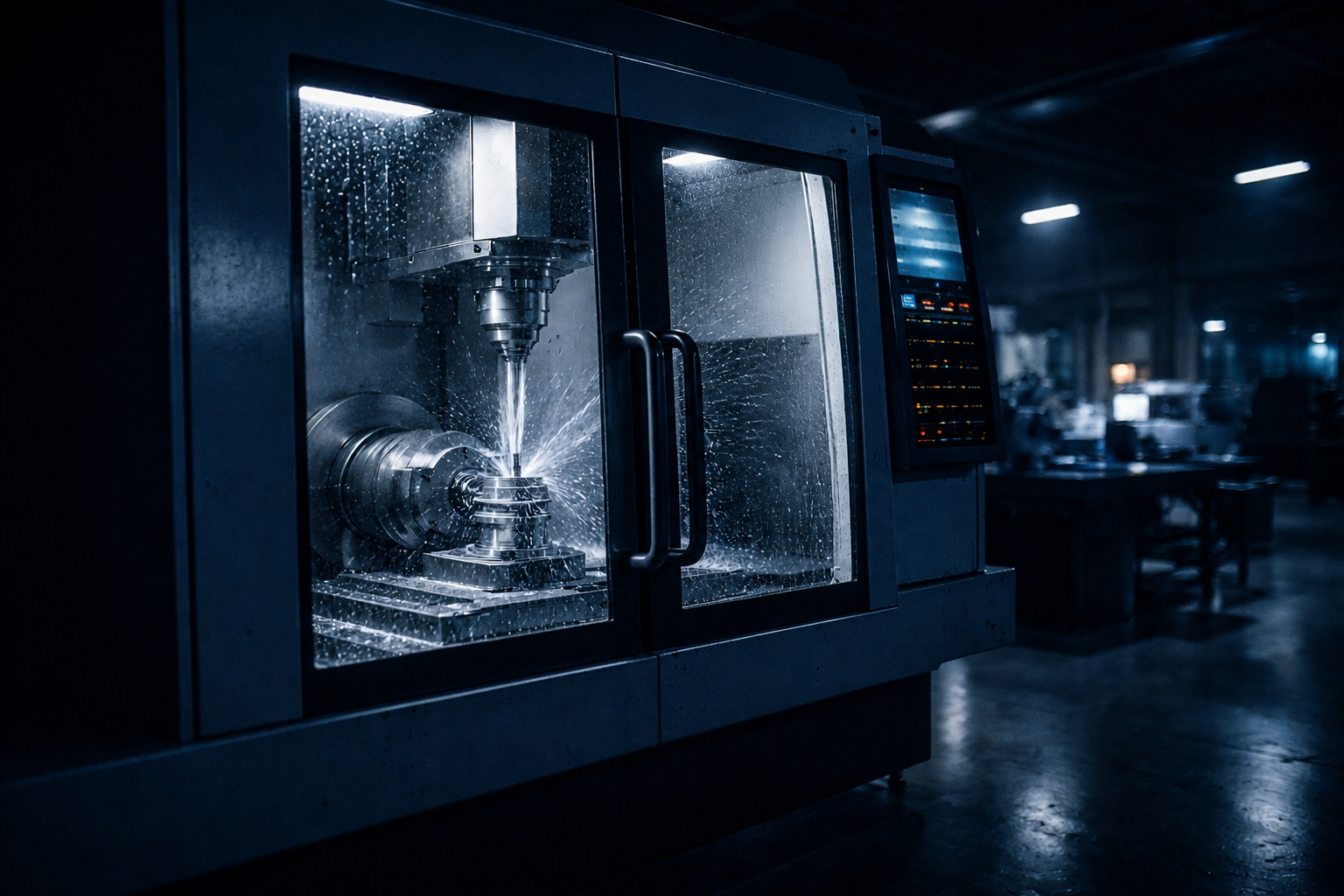
The role of coolant is still underestimated. Yet in CNC machining it is a critical point:
On a manned shift, this gets noticed. On the ghost shift, it does not. Coolant therefore has a direct impact on process reliability and production stability. This is why coolant management for lights-out manufacturing must be fully automated: monitoring, topping up and documenting the coolant automatically, without anyone standing by.
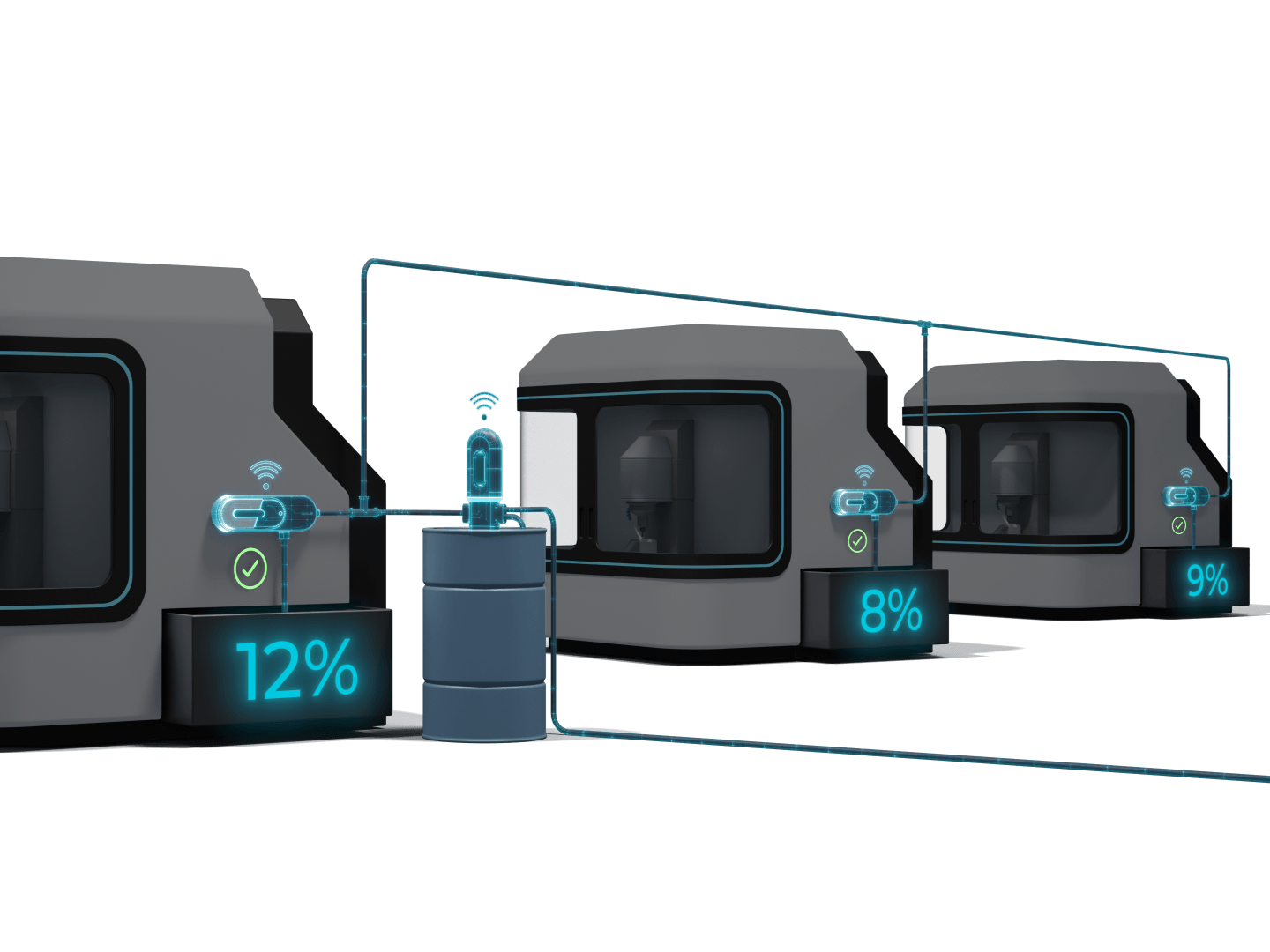
This is where Liquidtool Systems comes in. The AUTOPILOT measures, mixes and tops up coolant automatically. The solution is cloud-controlled, sends alerts and delivers complete documentation, all without human intervention. This turns one of the biggest risks in unmanned manufacturing into a calculable, monitored process. Coolant monitoring runs around the clock, and the seamless documentation is ready for audits and quality records.
The future belongs to AI-driven robots and learning systems. They recognise situations, respond flexibly and keep processes stable even when the unexpected happens. I am convinced that within ten years not just single shifts but entire factories will run around the clock with no one on site. These dark factories are no longer science fiction.
Anyone setting the course for lights-out manufacturing today should factor in coolant management from the very start. Because a chain is only as strong as its weakest link.
Frequently asked questions